
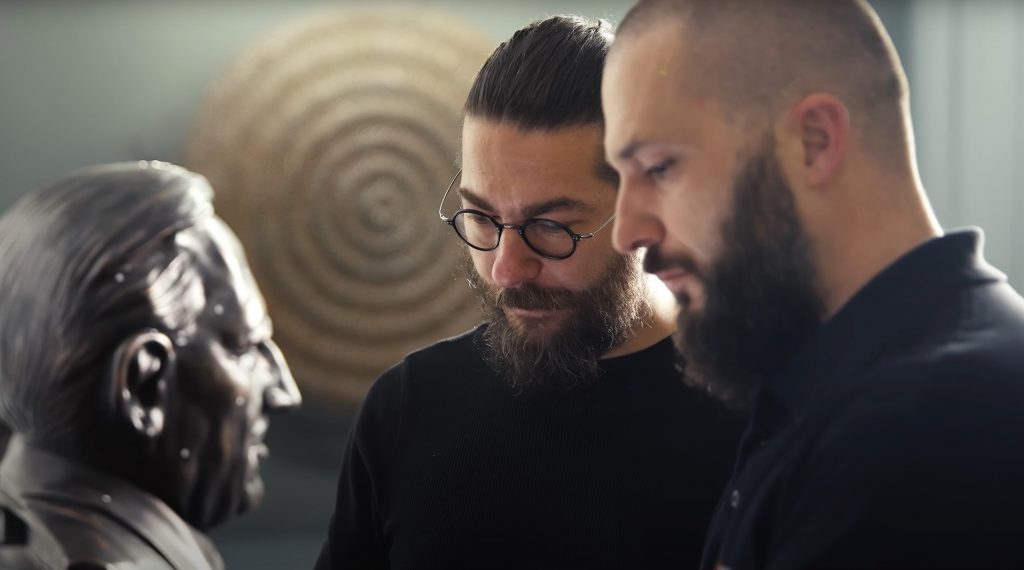
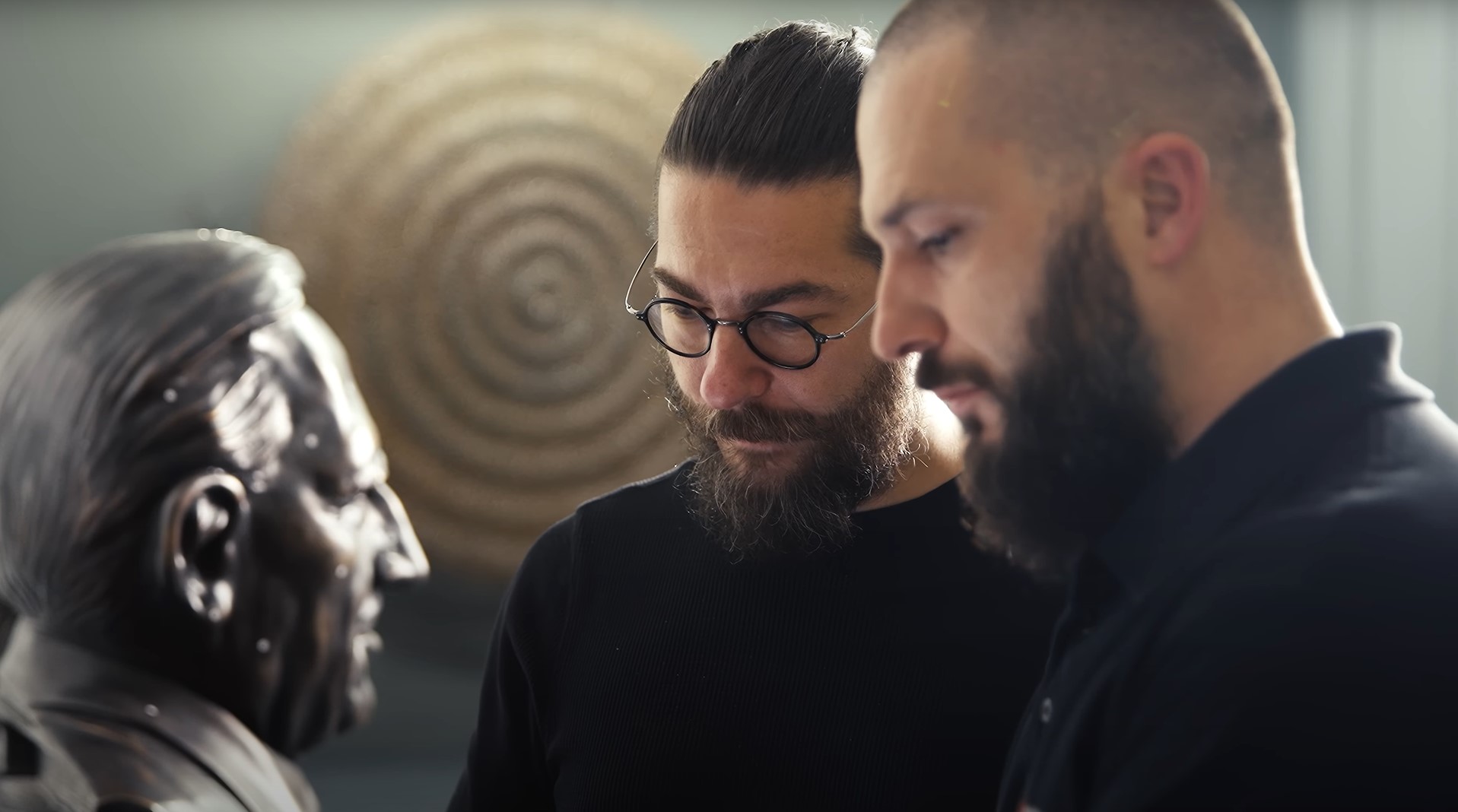
Founded by renowned artist Nikola Vudrag, Vudrag Industries is dedicated to the craft of metal sculpture. Based in Croatia, Vudrag’s studio is a place where vision and traditional craftsmanship shape breathtaking metal artworks that make a lasting impression, both locally and internationally.
3D scanning as a part of everyday artistry
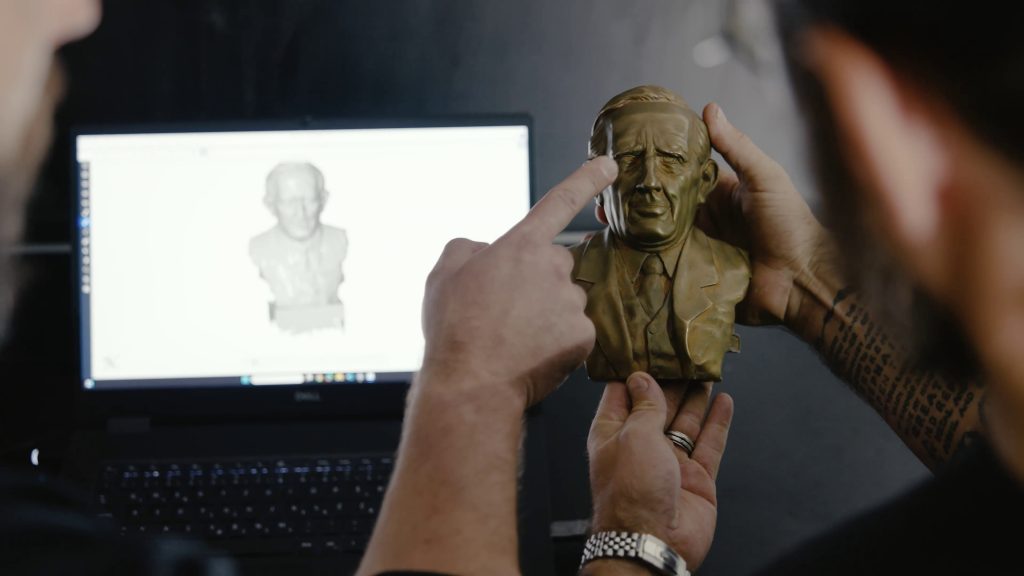
For Vudrag Industries, 3D scanning is more than a technical enhancement, it’s an essential part of the creative process. By integrating 3D scanning into the workflow, Nicola Vudrag can capture even the tiniest details of a sculpture, scale artworks and share digital versions of his artworks around the world. But most importantly, he can digitally preserve masterpieces for restoration and reinterpretation. Thanks to 3D scanning, he can monitor changes of the sculptures over time and take proactive measures to protect the cultural heritage for future generations. For him, 3D scanning is a gateway to new possibilities, enriching his artistic journey and every piece he creates.
ZEISS T-SCAN hawk 2 and ATOS Q
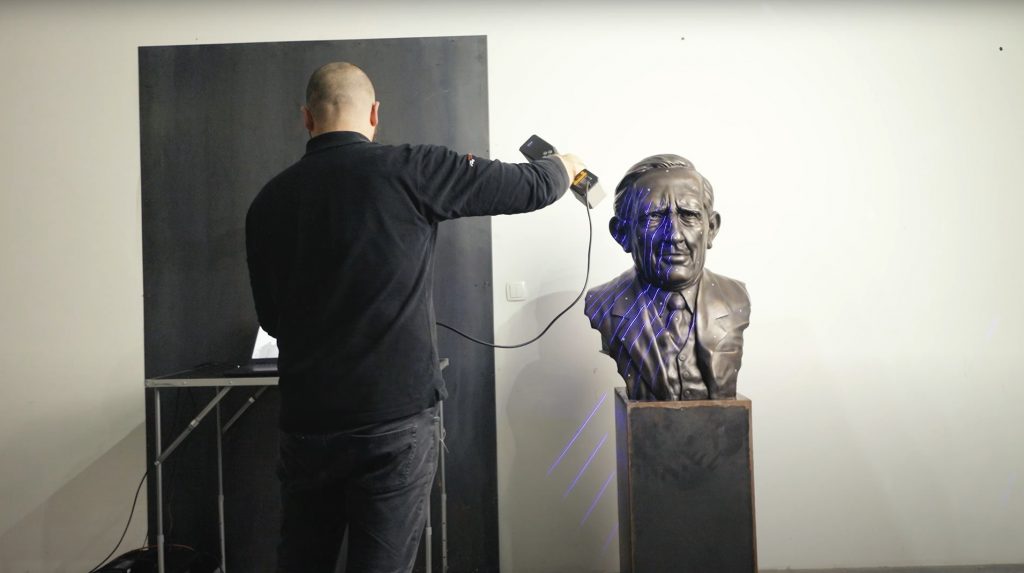
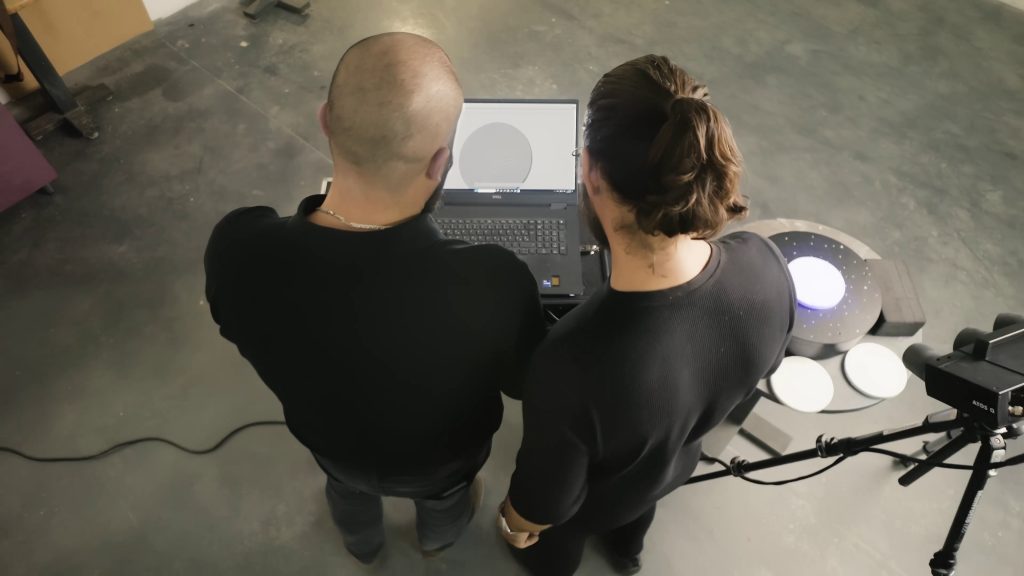
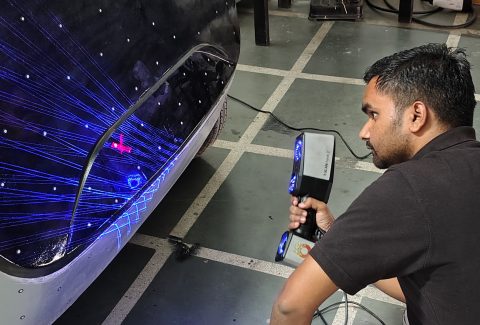
ZEISS T-SCAN hawk 2 and ATOS Q are the ideal solutions to support the vision of Nicola Vudrag vision of an interconnected and promising future. T-SCAN hawk 2, with its portability and accuracy, is perfect for scanning large artworks directly on-site, even in challenging environments. Meanwhile, ATOS Q delivers high-resolution scans of small artworks and provides the data for detailed digital models, vital for both quality control and creative exploration.
Inspiration and innovation
Nikola Vudrag finds inspiration from the world around him, especially nature and science. His sculptures represent our society’s values and current developments. He is committed to continues innovations and wants to inspire others by making art more accessible, sustainable, and future-proof.
For Vudrag, 3D scanning is a way to honor the past by ensuring that today’s creations can be appreciated, studied, and experienced far into the future – no matter the challenges of time, environment, or distance.
Using 3D scanning allows me to venture beyond the visible into the unseen world. It serves as a gateway for new possibilities of understanding, enabling us to explore, preserve, and present our world in new ways.
Nicola Vudrag - Artist and Founder of Vudrag Industries
Discover the full story
Vudrag Industries embodies the spirit of modern craftsmanship, seamlessly blending art and technology to inspire current and future makers. Dive deeper into his vision in our full Maker Portrait:
Vudrag Industries: Preserving metal artwork using 3D scanning
Using 3D scanning in the creation of artwork is everyday business at Vudrag Industries. Preserving the metal sculptures, scaling art and making the invisible seen is all possible via a simple 3D scan with ATOS Q and ZEISS T-SCAN hawk 2. Want to learn more about Vudrag Industries? Visit https://vudrag.com/
T-SCAN hawk 2
ATOS Q

3D scanners for small objects
Small objects place unique demands on the scanner, camera, and software used during 3D scanning. To capture even the finest details with precision, systems must offer high accuracy and resolution capable of reproducing complex surfaces correctly. Simple systems, such as depth cameras, often fail to deliver sufficient scanning results when true precision is required.
In this guide, you’ll learn which solutions are best suited for the precise digitization of fine structures, what to consider when choosing a 3D scanner for small objects, and which ZEISS small 3D scanners have proven their reliability in real-world applications.

3D scanners for large objects: Precise measurements at full scale
Large objects such as cars, industrial equipment, or complex mechanical components are often difficult to digitize with conventional scanners. A 3D scanner for large objects needs exceptional range, the ability to capture large scan volumes, and the highest accuracy and resolution. Today’s large 3D scanners combine powerful technology, handheld flexibility, and fast data processing algorithms to produce highly detailed 3D scans of big objects.
In this guide, you’ll discover what requirements a 3D scanner for large objects must meet, which applications benefit most from this scanning technology, and which 3D scanners and software solutions ZEISS offers for large-scale objects.

How does a 3D scanner work? Modern measurement technology explained
The precise digital capture of objects plays a central role in industry, research, and quality assurance. This is where modern 3D scanners demonstrate their full value. The way it works enables accurate measurement of even complex geometries and the finest surface details, producing reliable digital models in the process. Whether using light or laser, today’s scanning technology is essential for generating consistent point clouds and highly detailed 3D models.
In this guide, you’ll learn how a 3D scanner works, which types of 3D scanners exist, and what a 3D scanner is used for. You’ll also discover how ZEISS software solutions transform raw scan data into meaningful models and analyses — enabling accurate, reliable results across diverse applications.