


PowerUP’s mission in modern energy supply
PowerUP stands for innovation and reliability in gas engine technology. With technical excellence and a forward-looking approach, the company delivers premium gas engine solutions and services in more than 40 countries. Its mission is to extend the service life of engines and components, improve efficiency and reliability, and promote sustainability. This is especially important in regions with unstable power grids, where gas engines play a critical role in ensuring a dependable energy supply.
A highly skilled team works closely with customers to develop modern, efficient spare parts and maintenance strategies for gas engines while continuously maintaining the highest quality standards.
Condition-based maintenance through 3D data and continuous improvement
This initiative focuses on a condition-based maintenance (CBM) program that combines data acquisition with statistical analysis to track wear trends and patterns throughout the lifecycle of engines and components. The goal is to define optimized replacement intervals and refine tolerance limits, enabling components to be reused whenever possible. Through qualified inspection and refurbishment processes, PowerUP reduces costs while improving sustainability.
One of the key challenges in wear analysis and condition-based maintenance is looking beyond existing damage and using methods that enable reliable predictions of future behavior. This is where 3D scanning truly stands out. A 3D scanning system captures significantly more data than may initially be required for analysis, making it possible to generate new insights from historical measurement data. As a result, larger datasets can be leveraged to validate new approaches and continuously improve maintenance strategies.
From physical component to digital asset
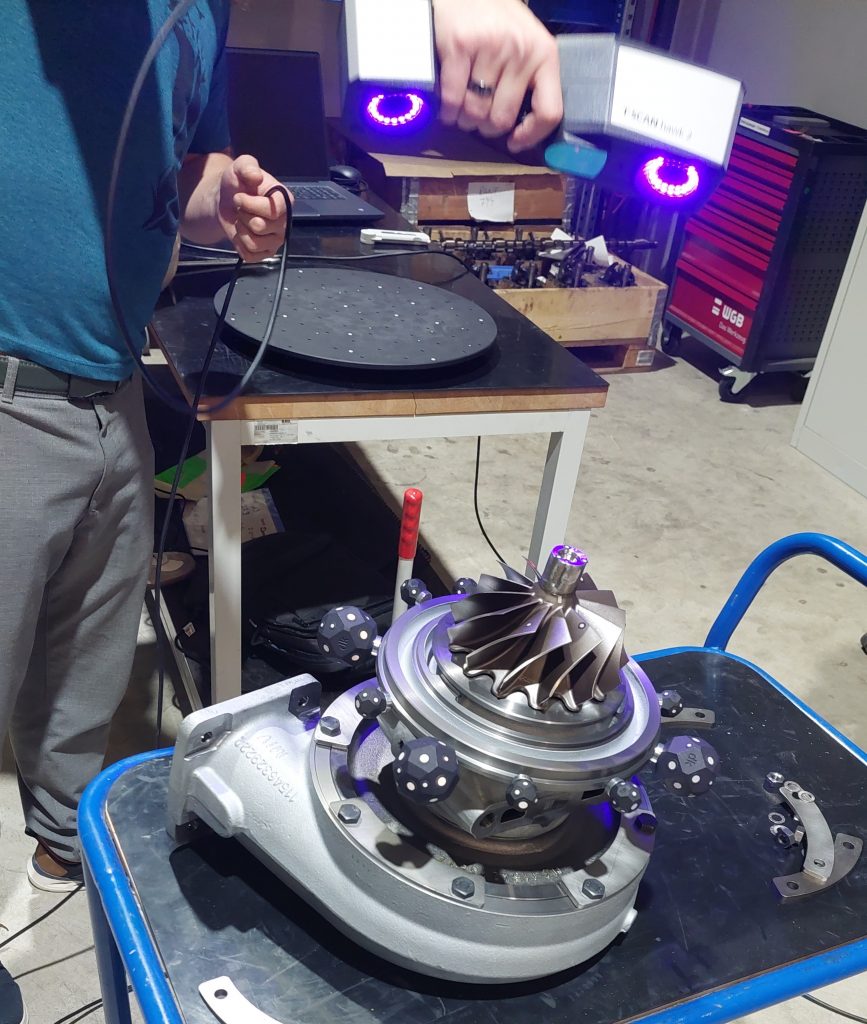
The implementation of 3D scanning primarily focuses on critical gas engine components such as connecting rods, cylinder heads, pistons, turbocharger shafts including turbines and compressors, crankshafts, and engine blocks. These parts vary greatly in size, complexity, and maintenance requirements.
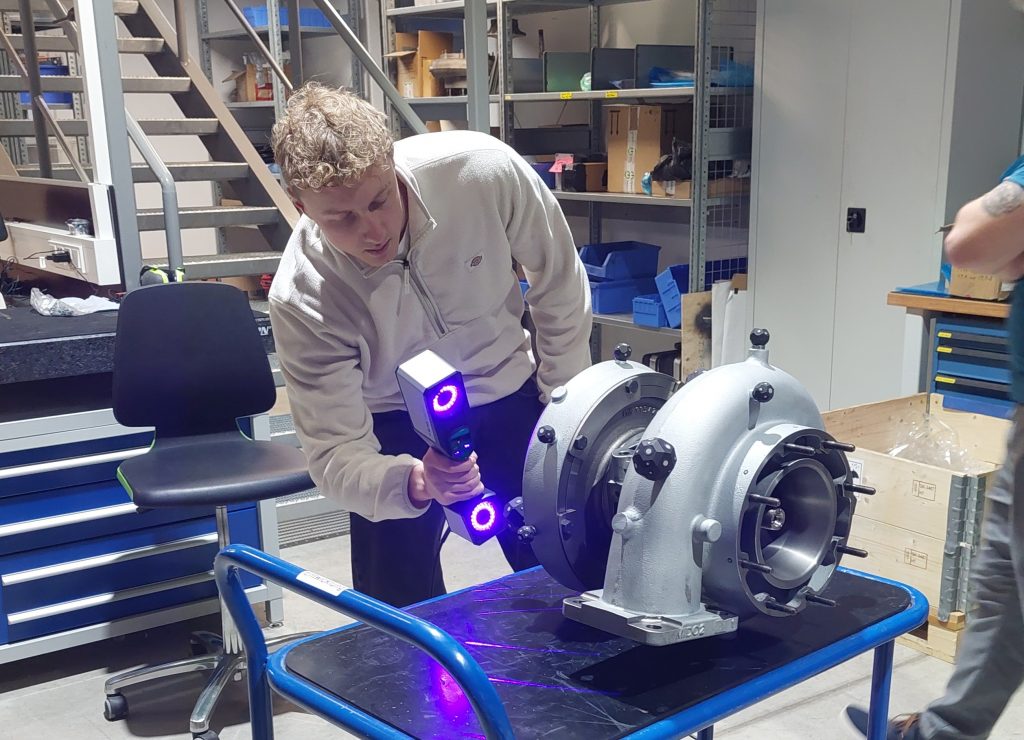
Handheld optical 3D metrology offers clear advantages in this environment. It enables flexible, non-contact, in-situ measurements without removing components from service. At the same time, it accommodates a wide range of geometries and sizes while providing advanced analysis capabilities beyond traditional tactile measurements, including surface comparisons and digital assembly analysis.
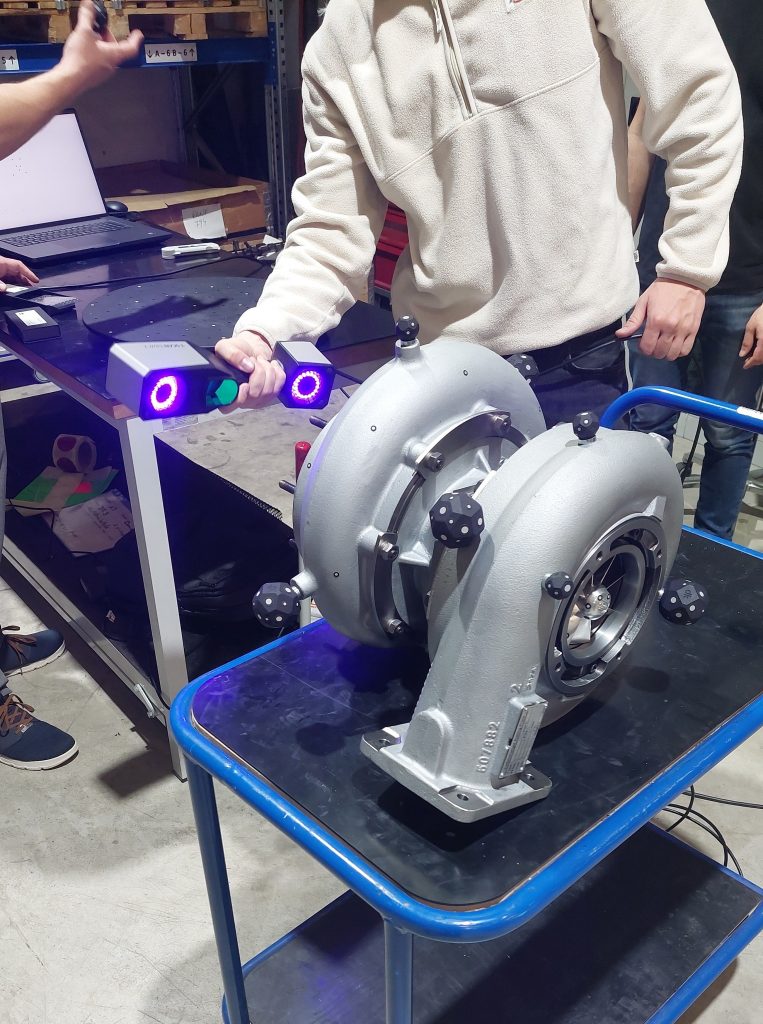
In addition to creating comprehensive 3D datasets for trend analysis and long-term archiving, the ZEISS T-SCAN hawk 2 supports serial quality inspections of complex components, reverse engineering projects, and engineering validation measurements.
ZEISS INSPECT for fast, integrated analysis
ZEISS INSPECT provides a tightly integrated software environment that perfectly complements the ZEISS T-SCAN hawk 2. Together, they enable fast data processing, robust reporting through predefined inspection and evaluation programs, and scalable analysis workflows, from data capture to long-term trend analysis.
Using ZEISS INSPECT, scans are aligned and cleaned, measured features are compared against CAD references, meaningful metrics are extracted, and trend datasets are created. This allows maintenance decisions to be made with confidence while supporting continuous product and process improvements based on reliable data.
Why this approach fits PowerUP
3D scanning based on predefined inspection plans accelerates decision-making and reporting while providing a solid foundation for data-driven reliability.
The workflow combining ZEISS INSPECT with the handheld ZEISS T-SCAN hawk 2, ranging from routine serial inspections and wear trend analysis to reverse engineering, is simple, efficient, and state-of-the-art. The result is a practical, fast, and highly repeatable measurement process that meets our demanding quality standards while offering maximum flexibility.
Data-driven maintenance planning increases component reliability and service life while preventing unplanned downtime. At the same time, a deeper understanding of wear patterns across the engine fleet enables continuous improvements in maintenance, overhaul processes, and component optimization.